Hyclues – #1 Ecommerce Marketing Agency
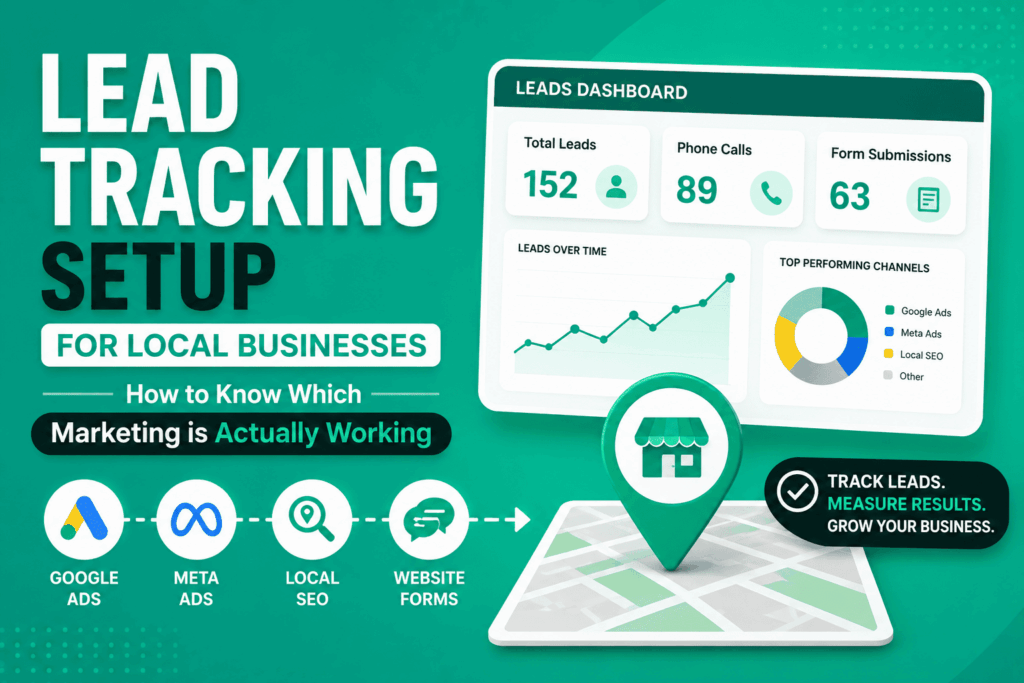
Lead Tracking Setup For Local Businesses: How To Know Which Marketing Is Actually Working

Lead Tracking Setup For Local Businesses: How To Know Which Marketing Is Actually Working

Key Issues :Marketing Attribution, Lead Tracking System, Local Business Analytics, Marketing ROI Tracking

Reading Time: 14 Minutes

Quick Answer

Most local businesses don’t have a lead generation problem.

They have a visibility problem.

Not visibility to customers.

Visibility into their marketing.

They know:

  • How much they spend
  • How many clicks they get
  • How many impressions they receive

But they don’t know:

  • Which leads came from which channel
  • Which campaigns generated appointments
  • Which marketing generated customers
  • Which channels generated profit

Without tracking, marketing decisions become guesswork.

Why Most Businesses Can’t Answer Simple Questions

Ask a local business:

Where did your last customer come from?

Many aren’t sure.

Ask:

Which campaign generated your best customer?

Silence.

Ask:

Which channel generated the highest revenue?

More silence.

The problem isn’t effort.

The problem is tracking.

The Hidden Cost Of Poor Tracking

Imagine spending:

₹1,00,000 per month

on marketing.

Without tracking you can’t confidently answer:

What’s working?
What’s failing?
What should be scaled?
What should be stopped?

This leads to wasted budget and slower growth.

The Biggest Tracking Myth

Many businesses believe:

“We have Google Analytics.”

Therefore:

“We have tracking.”

Not necessarily.

Analytics is only one piece of the puzzle.

True lead tracking requires connecting:

Traffic
Leads
Appointments

Customers
Revenue

The Hyclues Lead Tracking Framework

We focus on five tracking layers.

Layer 1: Traffic Tracking

The first question:

Where did the visitor come from?

Examples:

Google Ads
Facebook Ads
Instagram
SEO
YouTube
Email
Referral

Without source tracking, everything becomes blurry.

Layer 2: Lead Tracking

The second question:

Did the visitor become a lead?

Examples:

Form submissions
Phone calls
WhatsApp enquiries
Messenger conversations
Appointment requests

This is where many businesses stop.

That’s a mistake.

Layer 3: CRM Tracking

The third question:

What happened to the lead?

Examples:

Contacted
Qualified
Appointment Booked
Proposal Sent
Customer Won
Customer Lost

Now we start measuring outcomes.

Not just activity.

Layer 4: Revenue Tracking

The most important question:

Did revenue happen?

Many businesses optimize for:

Clicks
Leads
Cost Per Lead

The better question:

Which campaigns generated customers?

Revenue tracking changes everything.

Layer 5: Attribution

Attribution answers:

Which marketing influenced the customer journey?

Example:

Customer:

  1. Sees Facebook Ad
  2. Visits Website
  3. Watches YouTube Video
  4. Searches Google
  5. Books Appointment

Who gets credit?

Tracking helps reveal the journey.

The Most Important Metrics To Track

Google Ads

Many businesses track too much.

Start with:

Leads
Appointments
Customers
Revenue
Cost Per Customer
Return On Ad Spend

Everything else supports these metrics.

Why Cost Per Lead Can Be Misleading

Example:

Campaign A:

₹500 Lead

Campaign B:

₹2,000 Lead

Most people prefer Campaign A.

But what if:

Campaign A closes at 2%

Campaign B closes at 25%

Now Campaign B becomes far more valuable.

This is why lead tracking must continue beyond the form submission.

What Every Local Business Should Track

Calls

Call tracking matters.

Many customers prefer calling.

Forms

Every form should record source information.

WhatsApp

Track where conversations begin.

Appointments

Measure booking rates.

Sales

Track actual revenue.

Without this information, optimization becomes difficult.

The Problem With Last-Click Attribution

Many businesses give credit only to the final touchpoint.

Example:

Customer:

Facebook → Website → Google Search → Purchase

Google receives all the credit.

Facebook appears ineffective.

Reality:

Facebook started the journey.

This is why attribution matters.

Tools We Commonly Use

Depending on the business:

Google Analytics 4
Google Tag Manager
Meta Events Manager
CRM Platforms
Call Tracking Systems
WhatsApp Integrations
Server-Side Tracking

The tool matters less than the system.

Real-World Example

A local business believed Google Ads generated nearly all customers.

After implementing proper tracking we discovered:

  • Google closed many conversions
  • Facebook initiated many customer journeys
  • Remarketing influenced appointment bookings

The channels weren’t competing.

They were working together.

Tracking revealed the full picture.

Lead Tracking Audit Checklist

Before increasing marketing spend:

✅ Traffic sources tracked

✅ Forms tracked

✅ Calls tracked

✅ WhatsApp tracked

✅ CRM connected

✅ Revenue tracked

✅ Attribution reviewed

If not, start there first.

Common Lead Tracking Mistakes

Tracking Leads But Not Revenue

The most common mistake.

No CRM Integration

Leads disappear after submission.

Ignoring Phone Calls

Huge blind spot for local businesses.

Relying Only On Platform Reporting

Google and Facebook only see part of the journey.

No Attribution Strategy

Credit becomes misleading.

Signs Your Tracking Is Healthy

✅ You know where leads come from

✅ You know where customers come from

✅ You know customer acquisition cost

✅ You know channel profitability

✅ You can confidently scale campaigns

Frequently Asked Questions

What is lead tracking?

Lead tracking is the process of identifying where leads come from and following them through the sales journey.

Why is lead tracking important?

It helps businesses understand which marketing efforts generate customers and revenue.

Is Google Analytics enough?

Usually not. Businesses often need CRM, call tracking, and attribution systems as well.

Should local businesses track phone calls?

Absolutely. Many local businesses generate significant revenue through calls.

What is attribution?

Attribution is the process of assigning credit to marketing channels that influenced a conversion.

Why do businesses struggle with tracking?

Because customer journeys often involve multiple touchpoints across multiple platforms.

Related Articles

  • The Local Lead Generation Framework We Use To Generate Consistent Enquiries
  • Why Your CRM Is Losing You Leads
  • How To Automate Lead Follow-Up Using WhatsApp
  • Google Ads For Service Businesses
  • Facebook Ads For Local Businesses

Final Thoughts

Marketing becomes dramatically easier when you know what’s working.

Without tracking, growth is based on assumptions.

With tracking, growth becomes a process of informed decision-making.

Because the goal isn’t just generating leads.

The goal is understanding exactly where those leads come from, how they become customers, and which marketing activities deserve more investment.

And that’s where real marketing confidence begins.

Book 1:1 Free Audit Call

Syed - Co-founder Hyclues Media

5+ years experienced Lead Generation Expert helping businesses generate quality leads, improve conversions, and scale growth through performance marketing.

Book Free 1:1 Audit Call