Why Most UGC Ads Fail (And How To Fix Them)...
Key Things : UGC Advertising, User Generated Content Ads, UGC Video Ads, UGC Creative Strategy
Reading Time: 12 Minutes
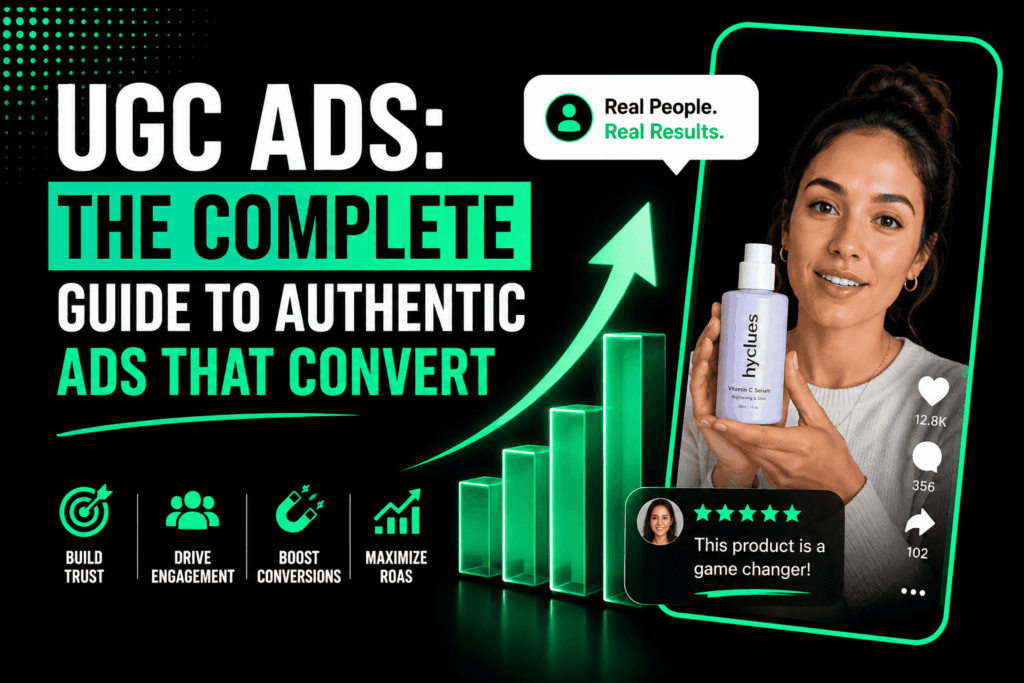
Most UGC ads fail because they focus on looking authentic instead of being persuasive.
A real customer holding a product doesn’t automatically create a good ad.
The highest-performing UGC ads combine:
The creator matters.
But the structure matters more.
Over the last few years, businesses have become obsessed with UGC.
And for good reason.
When done correctly, UGC often outperforms highly produced advertisements.
The problem?
Many brands misunderstood why.
They assumed:
“Let’s find somebody with an iPhone.”
“Let’s make it look natural.”
“Let’s make it look like TikTok.”
And suddenly they expected sales.
Unfortunately, authenticity alone doesn’t create conversions.
If it did, every customer selfie would become a winning ad.
The reason great UGC works isn’t because it looks casual.
It’s because it delivers a persuasive message in a believable way.
Consumers are exposed to advertising constantly.
They’ve learned to ignore polished corporate messaging.
Traditional advertising often feels like:
“We’re amazing.”
“Trust us.”
“Buy from us.”
UGC feels different.
It feels like:
“Here’s my experience.”
That difference matters.
People trust people more than brands.
The challenge is that many businesses stop there.
They focus on the creator and forget about the message.
The purpose of a UGC ad isn’t to look authentic.
The purpose is to move somebody through a decision-making process.
A strong UGC ad helps a viewer answer:
Every section of the ad should contribute to that process.
This is the biggest problem.
Most UGC creators start with:
“Hi guys, today I’m going to talk about…”
Or:
“I recently bought this product…”
Nobody cares.
Not yet.
The first few seconds determine whether somebody continues watching.
Without attention, nothing else matters.
“I recently found this product online.”
“I wasted thousands of dollars before I discovered this.”
“Nobody told me this when I started running Meta ads.”
“This one mistake was costing us customers every week.”
People stop scrolling because of curiosity.
Not introductions.
Many UGC ads jump straight into product features.
The viewer hasn’t even identified with the problem yet.
Example:
Bad:
“Our software has advanced reporting features.”
Better:
“We kept making marketing decisions based on inaccurate data.”
The problem creates relevance.
The product creates the solution.
The order matters.
This is one of the most common mistakes.
Businesses want authenticity.
Then they hand creators a script that sounds like a commercial.
Example:
“We are excited to introduce our revolutionary solution.”
Nobody talks like that.
Good UGC should sound conversational.
Not corporate.
The goal isn’t perfection.
The goal is credibility.
Claims without proof create skepticism.
People want evidence.
Examples of proof:
Real experiences.
Show the process.
Show outcomes.
Visual evidence.
Transformation stories.
Proof often matters more than production quality.
Many UGC ads simply end.
No direction.
No next step.
No action.
Even simple CTAs can improve performance.
Examples:
“Check it out.”
“Learn more.”
“See how it works.”
“Book a free audit.”
The viewer should know exactly what happens next.
Every UGC ad should contain five components.
Capture attention.
Create relevance.
Introduce the product or service.
Build trust.
Create action.
This framework works across:
Because it follows human psychology.
The best UGC ads often feel simple.
But they’re highly structured.
The viewer rarely notices the structure.
They simply experience the story.
The creator appears authentic.
The message feels relevant.
The proof feels believable.
The action feels natural.
That’s the goal.
This distinction is important.
Many businesses create content.
Very few create ads.
Content:
Entertains.
Educates.
Informs.
Ads:
Create action.
A good UGC ad can feel like content while still functioning as an advertisement.
That’s where the magic happens.
A business had produced multiple UGC videos.
The creators looked authentic.
The production quality was solid.
Performance was disappointing.
After reviewing the videos, we noticed something.
The creators spent most of the ad describing the product.
Very little time was spent discussing the problem.
We restructured the content.
The product remained the same.
The creator remained the same.
The difference was the message.
By focusing on the problem first and introducing proof earlier, performance improved significantly.
The lesson?
The creator wasn’t the issue.
The structure was.
Before launching a UGC ad, ask:
✅ Would this stop a scroll?
✅ Is the pain point obvious?
✅ Is the solution clear?
✅ Is there evidence?
✅ Is the next step obvious?
If any answer is no, improve that section before launching.
❌ Weak hooks
❌ Generic messaging
❌ No proof
❌ Scripted delivery
❌ Unclear CTA
✅ Strong watch time
✅ Healthy CTR
✅ Positive engagement
✅ Consistent conversion performance
✅ Repeatable results
A UGC ad uses creator-style content to promote a product or service in a more relatable and authentic format.
People often trust recommendations and experiences from individuals more than traditional brand messaging.
Not necessarily. The creator’s ability to communicate the message is often more important.
The hook.
Without attention, the rest of the ad never gets seen.
The ideal length depends on the platform, audience, and objective.
Not usually.
Message quality tends to matter more than production quality.
Common causes include weak offers, weak proof, poor landing pages, or ineffective calls to action.
Most UGC ads fail for the same reason most advertisements fail.
They focus on the product instead of the customer.
The best UGC ads don’t feel like advertisements.
They feel like experiences, observations, and stories that naturally lead somebody toward a decision.
Authenticity helps.
Structure converts.
And when you combine both, UGC becomes one of the most powerful advertising formats available today.
Growth Hacker & eCommerce Ads Expert with 8+ years of experience in scaling brands through performance-driven ad strategies.
Why Most UGC Ads Fail (And How To Fix Them)...
The UGC Ad Brief Template We Use For Creators Key...
The Founder Content Framework For Local Businesses (That Doesn’t Feel...
Why Most UGC Ads Fail (And How To Fix Them)...
The UGC Ad Brief Template We Use For Creators Key...